
How To Save Money On Your Heating Bills
When a cold snap hits the United Kingdom, heating bills often rise faster than temperatures fall. With winter energy costs still a major concern for many households, knowing how to stay warm without overusing your boiler can make a real difference.
The best approach is a balanced one: combine sensible heating habits with better heat retention and a few creative, low-energy ways of keeping cosy.
Use your heating more efficiently
Heating smarter is usually the quickest way to save money. Many homes are warmer than they need to be, especially during the day.
- Turning your thermostat down by just 1°C can reduce heating costs noticeably while still keeping rooms comfortable.
- Using timers or smart controls ensures your heating is only on when you actually need it, rather than warming an empty house.
- Bleeding radiators helps them heat up evenly, preventing cold spots and reducing strain on your boiler.
These small adjustments cost nothing but can have a big impact over a prolonged cold spell.
Stop heat escaping your home
Even the most efficient heating system will struggle if warmth is leaking out. During a cold snap, preventing heat loss is just as important as generating heat.
Drafts around doors, windows, and letterboxes are one of the biggest causes of wasted energy. Simple draft excluders, adhesive sealing strips, or even rolled towels can block cold air effectively. Curtains also matter more than many people think. Closing thick or thermal curtains as soon as it gets dark helps keep warmth indoors, particularly in older or poorly insulated homes. Cold floors can make rooms feel uncomfortable even when the air is warm, so adding rugs to wooden or tiled floors provides extra insulation and instant comfort.
Adjust how you live indoors
Staying warm is not only about the house—it’s about how you use it. Simple lifestyle changes can significantly reduce your reliance on heating.
- Wearing layers indoors traps heat better than a single heavy jumper, especially when combined with warm socks and slippers.
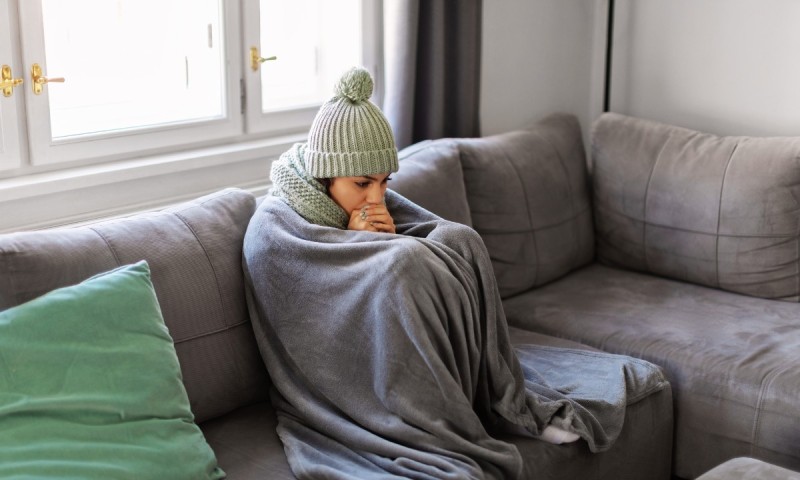
- Keeping blankets or throws on sofas and office chairs provides low-cost warmth during evenings or while working from home.
- Gentle movement, such as stretching or light housework, boosts circulation and helps your body stay warm naturally.
When you feel warmer, you’re far less likely to reach for the thermostat.
Novel ways to keep warm for less
Beyond conventional advice, there are some clever, lesser-known methods that focus on heating you rather than the entire room.
- Heated throws, electric blankets, or heated seat pads use far less electricity than central heating and provide targeted warmth.
- Hot water bottles aren’t just for bedtime—using one on your lap or behind your back during the day can keep you warm for hours.
- Rearranging furniture can help too. Sitting against cold external walls often makes rooms feel colder than they are, so moving seating closer to internal walls or radiators can improve comfort instantly.
These approaches allow you to reduce overall heating use without sacrificing warmth.
Make the most of heat you’re already paying for
A surprising amount of heat goes to waste in everyday life. After showering, letting warmth from the bathroom circulate into nearby rooms (once steam has cleared) can gently raise the temperature elsewhere in your home. Cooking meals in the oven also adds residual warmth to your living space, helping to take the edge off cold evenings. While appliances should never be used as primary heat sources, using the warmth they naturally produce is simply being efficient.
Think longer term
Cold snaps often highlight weaknesses in home heating and insulation. While not everything can be fixed immediately, small upgrades can help reduce future bills. Smart thermostats prevent wasted heating by learning your routine, loft insulation dramatically cuts heat loss, and reflective radiator panels help keep warmth inside rooms instead of letting it escape through walls.
Saving money on heating bills during a UK cold snap doesn’t mean sitting in the cold. By combining efficient heating use, basic draft-proofing, sensible daily habits, and a few creative warming techniques, you can stay comfortable without overspending. The goal isn’t to use no heating at all—it’s to make every bit of warmth work harder for you.
Our friends over at Expert Home Tips have got some great advice in the video below and in this helpful guide.